Compliance · Recycling · Reuse · Fly-tipping · Council updates · WasteSnap updates · Waste & Recycling News
Could bulky waste collection costs be contributing to fly-tipping in Wales?
Concerns have been raised over whether the cost of bulky waste collections could be contributing to fly-tipping in parts of Wales. WasteSnap looks at the issue, local collection costs and why giving households more simple, legal ways to get rid of unwanted rubbish could form part of the solution.
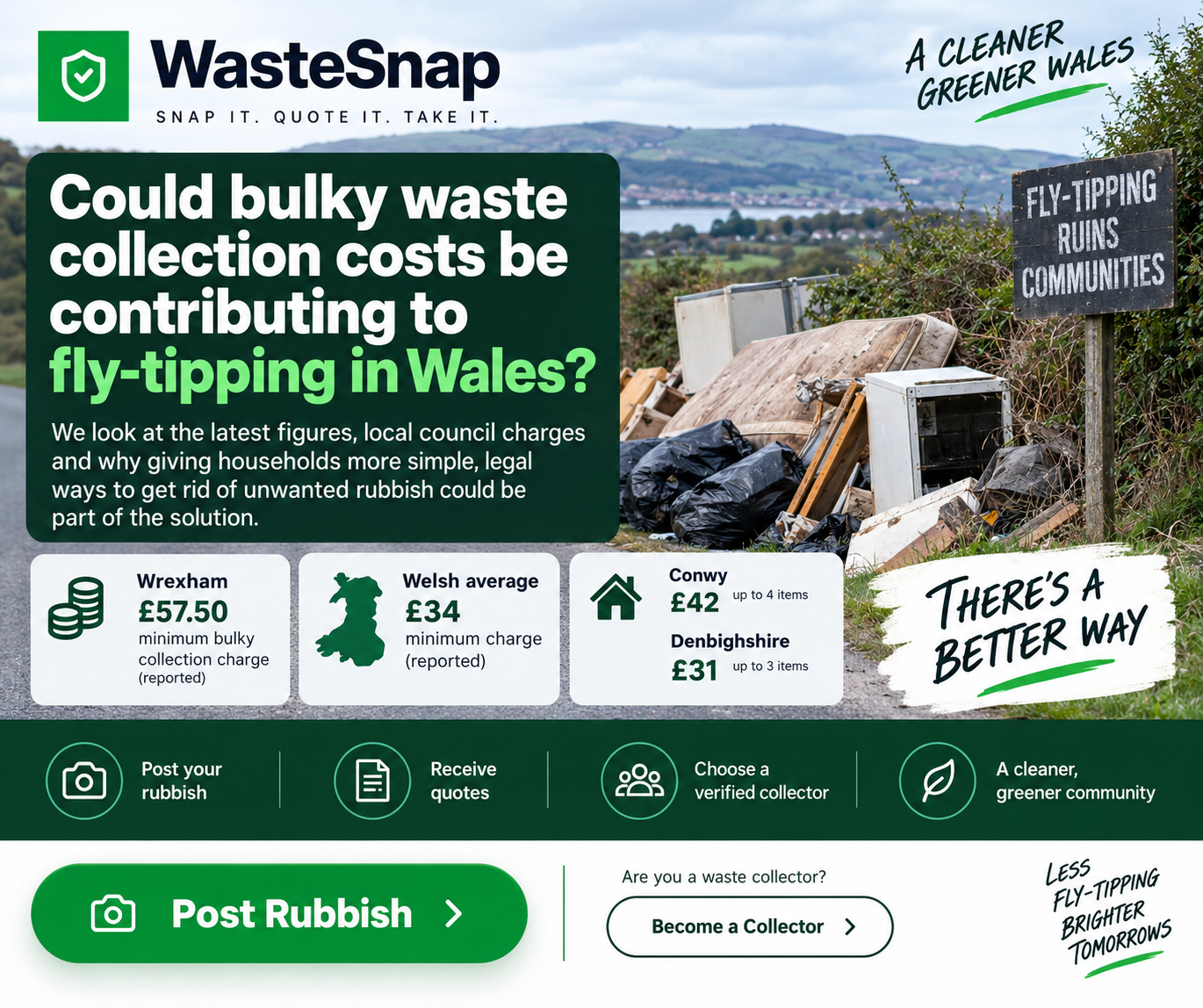
The cost of getting rid of unwanted furniture and other bulky household items has come under the spotlight following concerns that high collection charges could be making it more difficult for some households to dispose of rubbish conveniently and legally.
A recent Nation.Cymru report highlighted concerns over the issue, including the cost of council bulky-waste collections in different parts of Wales.
The report highlighted a minimum bulky-waste collection charge of £57.50 in Wrexham, compared with a reported Welsh average minimum charge of around £34.
The figures have prompted a wider discussion about whether the price and accessibility of legitimate waste disposal could be one of several factors affecting fly-tipping.
There is no justification for dumping waste illegally, and households have a responsibility to make sure their rubbish is passed to somebody authorised to take it.
But tackling fly-tipping does not only have to be about enforcement. Making legitimate rubbish removal convenient, transparent and easier to arrange can also form part of the solution.
What does bulky waste collection cost locally?
Charges and services differ between councils.
In Conwy, the council currently charges £42 for up to four bulky items, including items such as furniture, mattresses and electrical appliances.
Conwy’s service has some limitations. DIY and demolition waste such as rubble, bricks and plasterboard is not included, and the collection team does not enter a property to bring items outside.
In Denbighshire, a bulky collection currently costs £31 for up to three items, £37 for four, £42 for five and £48 for six items.
Council bulky-waste services and household recycling centres remain useful options and, for many people, will be exactly what they need.
However, not every rubbish clearance fits neatly into a standard bulky-item collection.
A household may have a mixture of old furniture, bags of rubbish, garden items, dismantling work, DIY waste or an entire garage, garden or property that needs clearing.
Some customers may also need collectors to remove items from inside a property rather than having everything waiting outside.
That is where having additional legitimate choices can help.
WasteSnap gives households another option
WasteSnap was created to make arranging private rubbish removal simpler.
Instead of searching through numerous adverts, contacting several businesses individually or accepting an offer from somebody they know little about, a customer can post the rubbish they need removing through WasteSnap.
Customers can:
- upload photos of their rubbish
- add a video where useful
- describe what needs collecting
- provide details about access or dismantling
- receive quotes from collectors
- compare their options
- choose the collector and quote that suits them
WasteSnap is designed to give customers more visibility over who is offering to remove their waste while giving legitimate local waste businesses another way to find collection work.
Knowing who takes your rubbish matters
Choosing a rubbish collector should not only be about finding the lowest price.
Natural Resources Wales advises householders that waste should only be transferred to somebody authorised to accept it, meaning a registered waste carrier.
It also advises people to keep useful records of the person or company that takes the waste, because those records can help demonstrate the checks made if the rubbish is subsequently fly-tipped.
Businesses transporting waste will generally need to be registered as waste carriers, and registration details appear on the relevant public register.
WasteSnap requires collectors using the platform to provide their waste-carrier registration details as part of the collector approval process.
This is one of the reasons the platform was built around registered collector profiles rather than simply operating as an anonymous classified-advertising page.
Customers can therefore make a more informed decision about who they are allowing to take their rubbish.
A clearer digital trail
Another aim of WasteSnap is to create a clearer record of what happened to a collection.
The job begins with the customer’s rubbish post, including the description and photographs.
Quotes are then associated with that job, the chosen collector is recorded through the platform and the collection can progress through to completion.
WasteSnap also has digital waste documentation functionality where applicable.
This creates greater transparency than an informal arrangement made with an unknown collector through a social-media comment or cash transaction.
Prevention as well as enforcement
Fly-tipping causes problems for communities, councils, landowners and the environment.
Enforcement against those responsible remains important, but prevention deserves attention too.
If people have straightforward ways to find legitimate collectors, understand what a collection will cost and keep a clearer record of who took their rubbish, it can become easier to make a responsible choice.
WasteSnap does not replace local-authority bulky collections, household recycling centres or reuse services.
It adds another option.
For somebody with a mixed load, larger clearance, difficult-to-move items or a job outside the scope of a normal council bulky collection, being able to post photographs and compare private collection quotes could make arranging the job considerably simpler.
Reuse should come before disposal where possible
Not everything unwanted necessarily needs to become waste.
Furniture, appliances, scrap metal and other household items may still have useful life left in them.
Waste guidance prioritises preventing waste and then reuse, recycling and recovery before final disposal.
WasteSnap is continuing to develop its approach to reuse so that suitable items can have a better chance of being reused rather than automatically entering the waste stream.
WasteSnap now live across Conwy and Denbighshire
WasteSnap has initially launched across Conwy and Denbighshire, with the platform designed to expand into further areas as its collector network grows.
Customers can post rubbish, upload photographs and details of the job and receive quotes from available collectors.
Waste carriers can also register as WasteSnap collectors, set the areas they cover and receive opportunities when suitable rubbish-collection jobs are posted.
The aim is simple: make responsible rubbish removal easier for customers while creating more opportunities for legitimate local collectors.
Need rubbish removed?
Post your rubbish on WasteSnap and receive quotes from collectors covering your area.
Are you a waste collector?